
the evolution of press tours
the ask
Research a topic of your choice relating to fashion and film, and conduct a presentation to share your findings.
media & pr strategy
cultural analysis
key skills
brand positioning
Attention to detail
analytical thinking
creative direction
the process
-
When choosing my subject, I knew I wanted to do it on how press tours and their fashion begin to build the world of a film. I found it fascinating, specifically how the Wicked press tour perfectly built the world before the film's release. I then created an annotated bibliography of sources about press tours and their evolution.
-
I first approached my research by studying the evolution of press tours and how they shape the world of film. I then deep-dived into two stylist and actor relationships to gain a better understanding of how they do press tours.
-
Lastly, I created my slide deck and presentation, aiming to visually show the evolution while providing as much information as possible, and recorded my presentation.
press tours & history
A film press tour is a promotional event where the cast and crew of a film travel to different cities or regions to meet with the media, conduct interviews, and participate in public appearances to generate buzz and excitement for the upcoming release. These tours aim to increase awareness and build anticipation for the movie before its release.
-
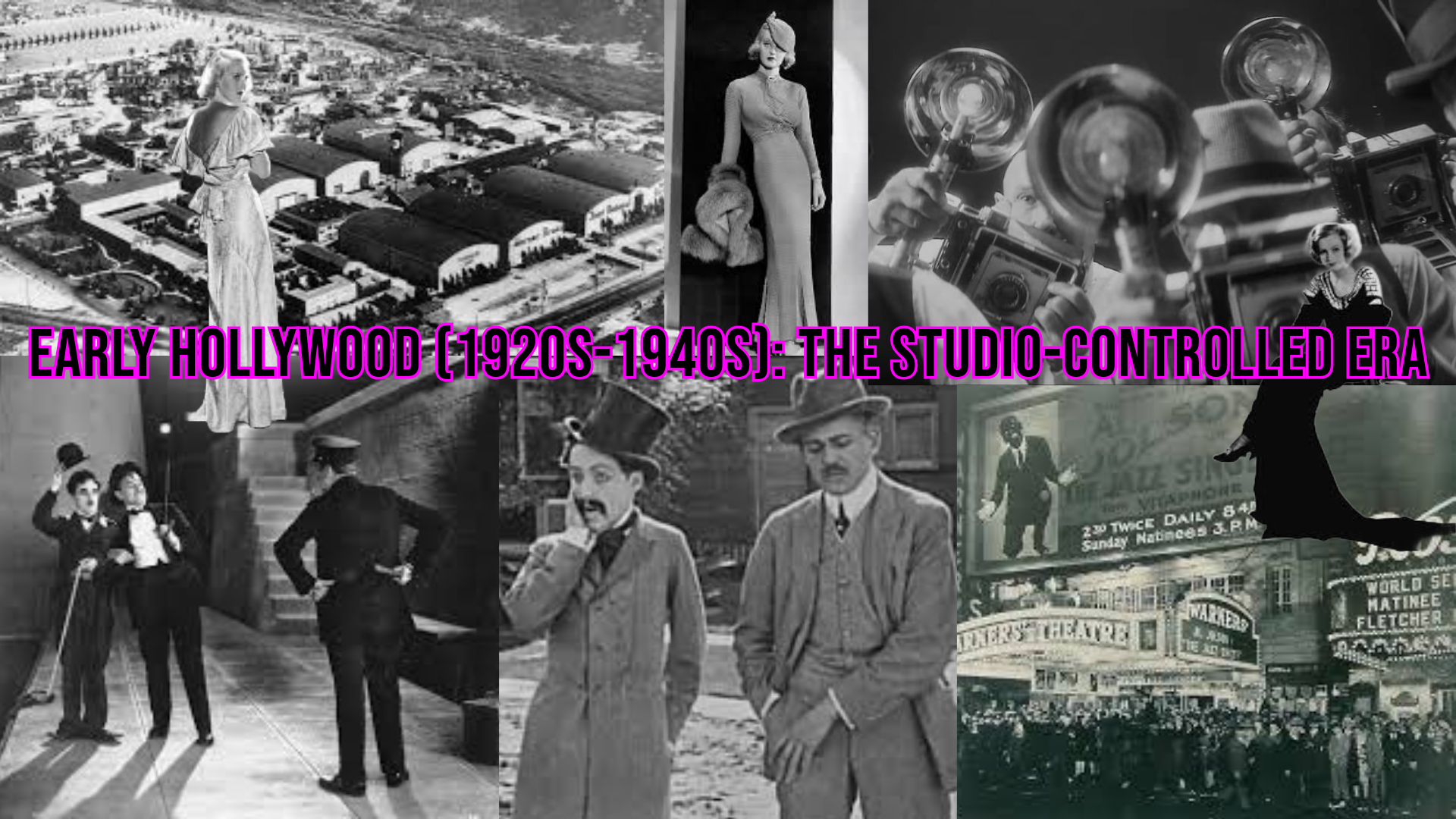
At this time, press promotion was tightly controlled by major studios like MGM & Warner Bros. Studios built their stars' personas & used carefully managed interviews and photo ops, and studios controlled everything, including how stars dressed, and image was everything. At this time, publicists would arrange for stars to visit key cities to promote films, but it was nothing like we know today. The fashion at this time was also controlled; think old Hollywood glamour meets studio-approved style: floor-length gowns, fur, gloves, and tailored suits. Actresses like Greta Garbo and Bette Davis wore outfits that reinforced their screen personas
-
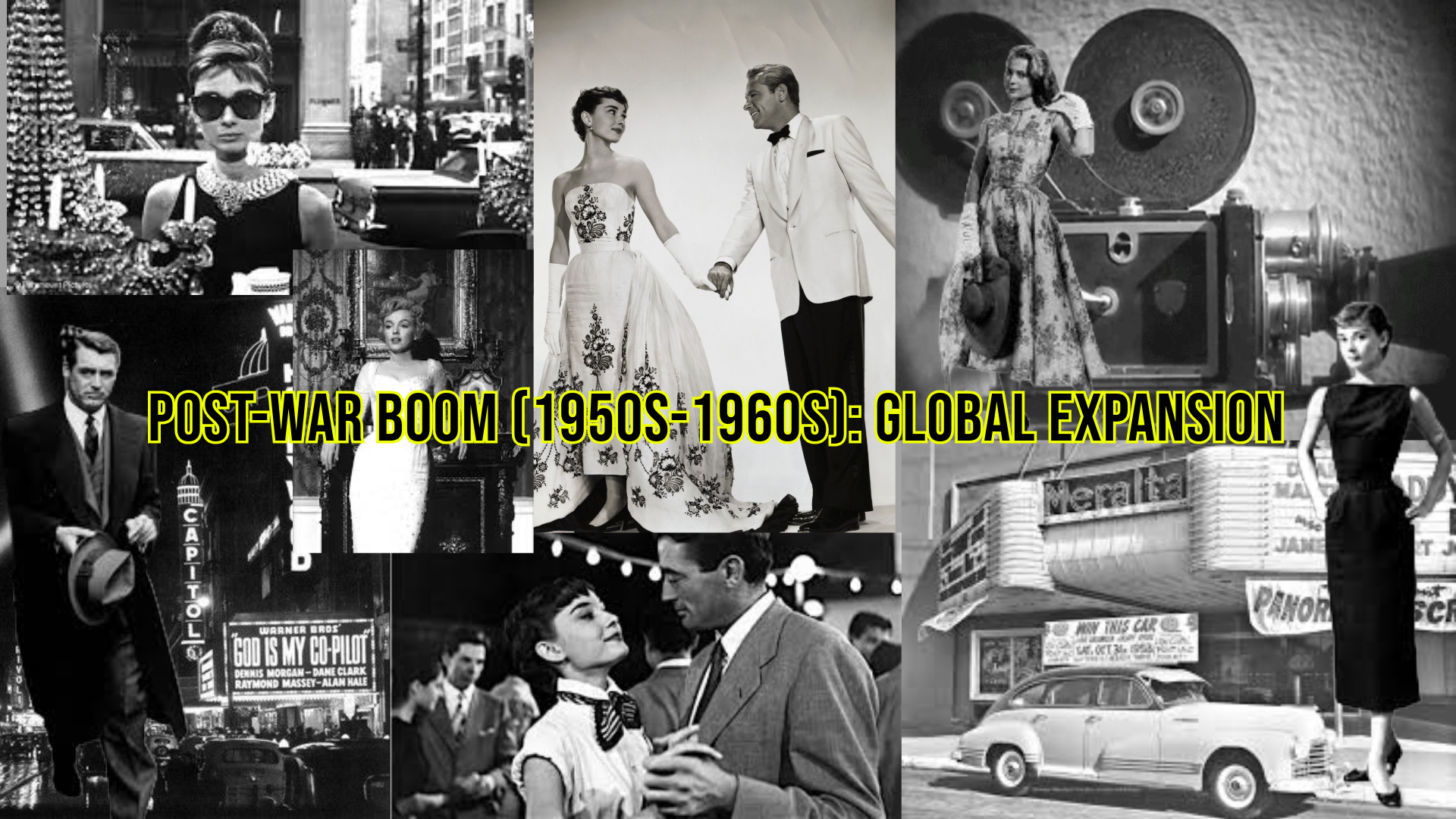
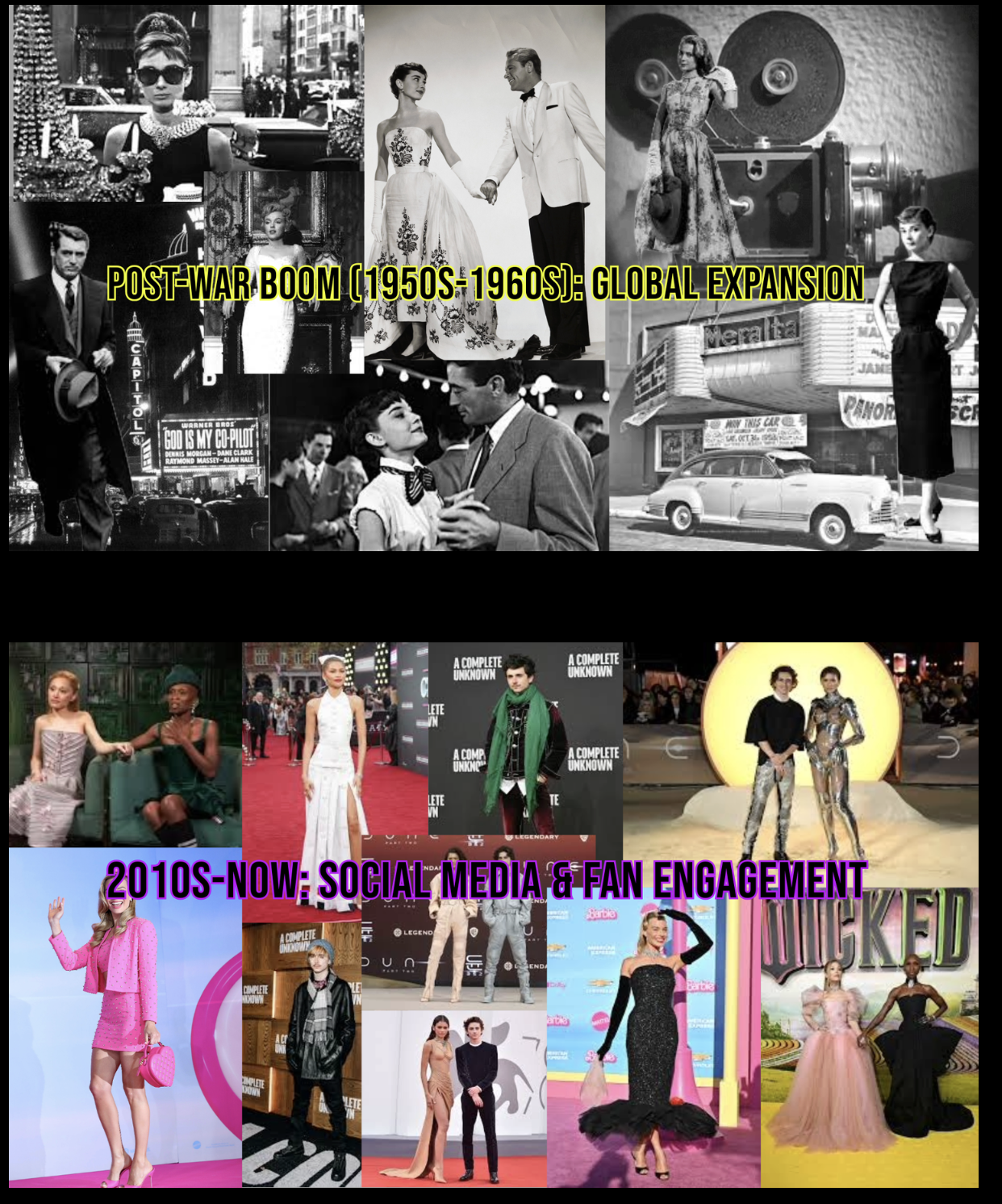
As Hollywood films became more international, studios began sending stars overseas for publicity. These tours often included premieres in major cities, radio/TV interviews, and press junkets. The fashion at this time was portrayed as polished international elegance with movie-star mystique. Stars' looks were tailored to convey class but also approachability, especially as TV interviews grew. Women like Audrey Hepburn and Grace Kelly dressed in refined, European-inspired looks, think fitted dresses, pearls, gloves, and tailored coats. Speaking of Hepburn, this leads to a rise in actor and designer collaborations, as Audrey Hepburn and Hubert de Givenchy, as their relationship was the most documented relationship between a Hollywood star and designer. Men like Cary Grant and Sean Connery leaned into refined, masculine tailoring with slim-cut suits and understated luxury
-
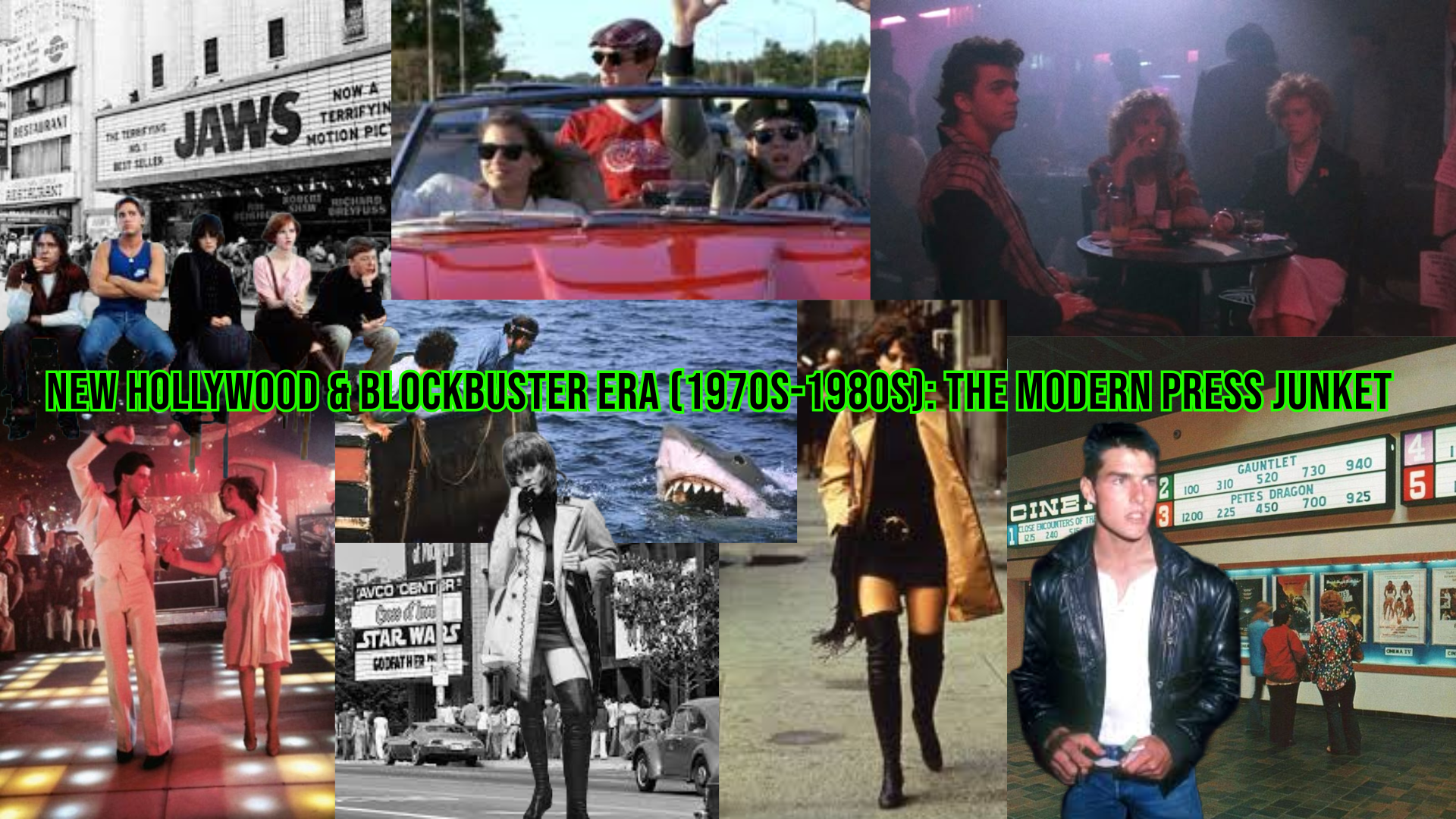
As blockbusters like Jaws and Star Wars changed film marketing, the press junket became a standard for press tours. Studios flew journalists to hotel suites for a day or two of non-stop interviews with talent. The stars during this era began to push against studio molds of what they should wear. Jane Fonda, for example, mixed politics and personal style. In the 1970s stars were wearing wide lapels, jumpsuits, flowy dresses, fringe, and earthy tones; a more relaxed but edgy press tour wardrobe emerged. In the 1980s, there were flashier, bolder looks, big shoulders, bold colors, and designer logos. The rise of power dressing, especially for women. Celebs like Cher and Tom Cruise began cultivating signature styles. Designers started recognizing the promotional power of dressing stars for tours.
-
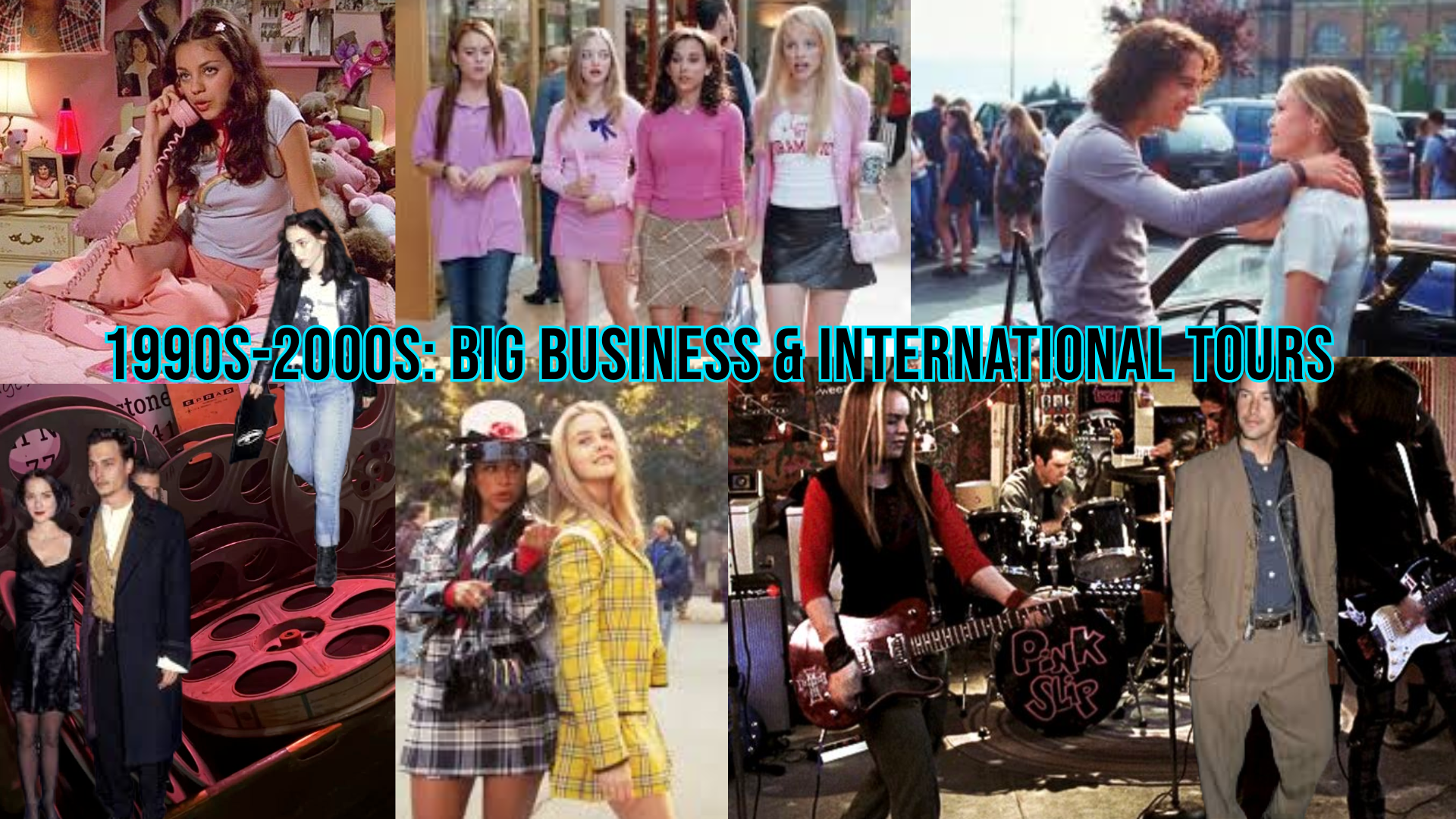
As international box offices became more important, studios ramped up global press tours. Stars might hit 5–10 countries in a couple of weeks to promote a single movie. Interviews expanded from print and TV to include internet outlets and entertainment websites. Fashion during this time was characterized by a much more maximalist and couture style. In the 1990s: Understated luxury ruled: Calvin Klein slip dresses, Prada suits, and sleek hair. Think Winona Ryder, Gwyneth Paltrow, or Keanu Reeves. The 2000s were all about more flash and more glam; think Beyoncé in Versace, Angelina Jolie in leather, or the whole “Sex and the City” gang in couture. Stars became walking brand ambassadors for fashion houses. Fashion coverage of press tours exploded with early internet/blog culture.
-
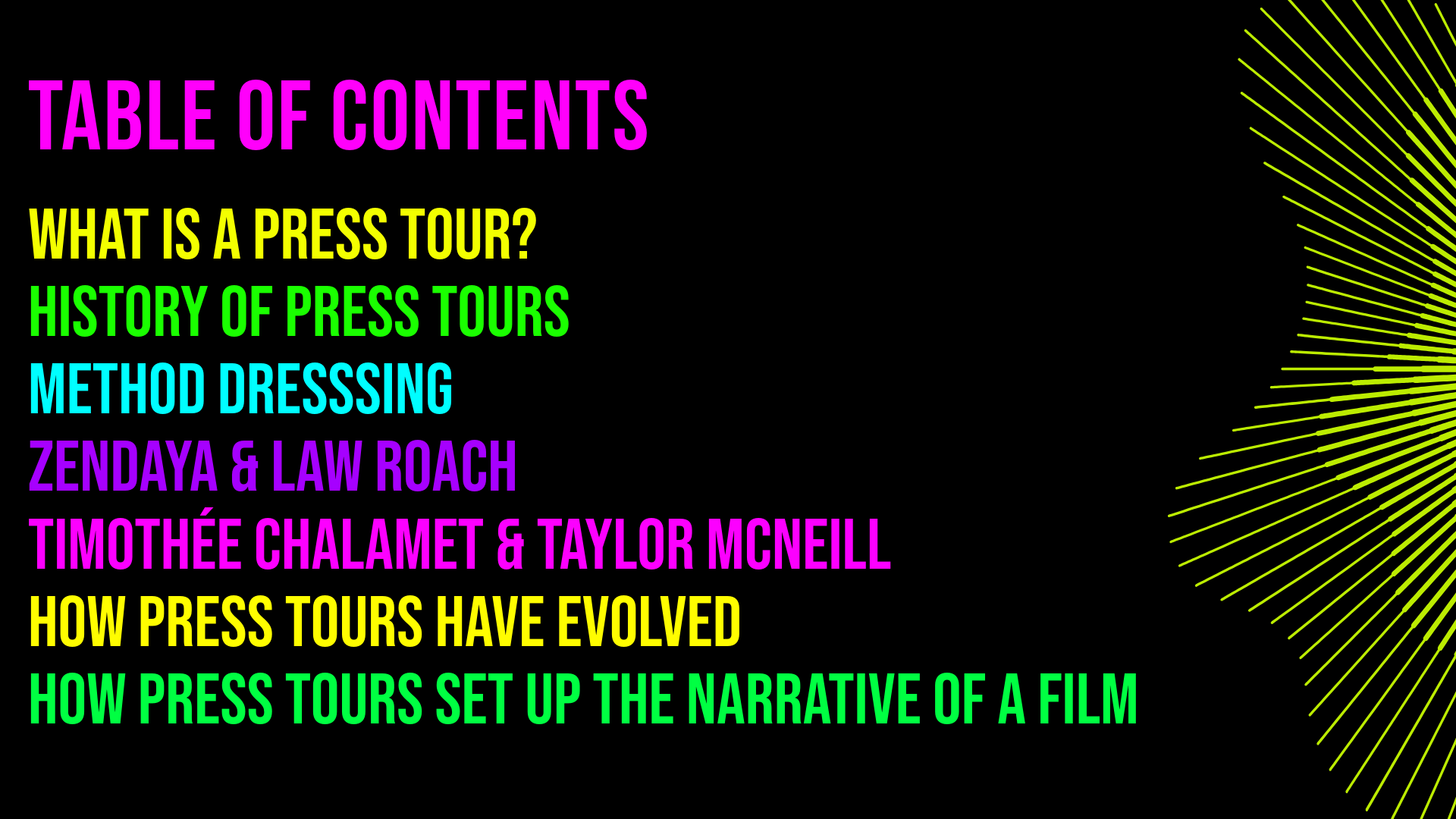
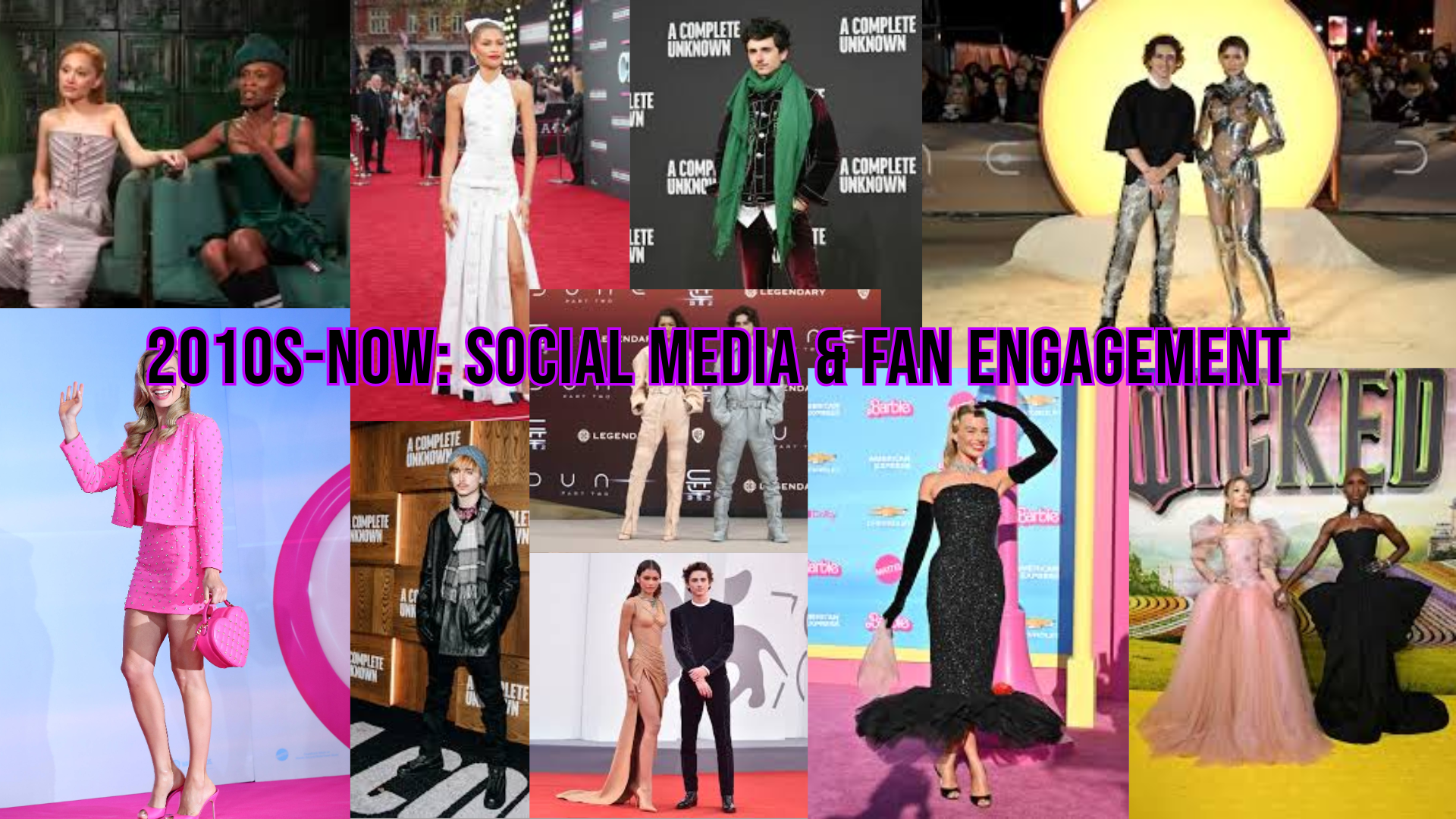
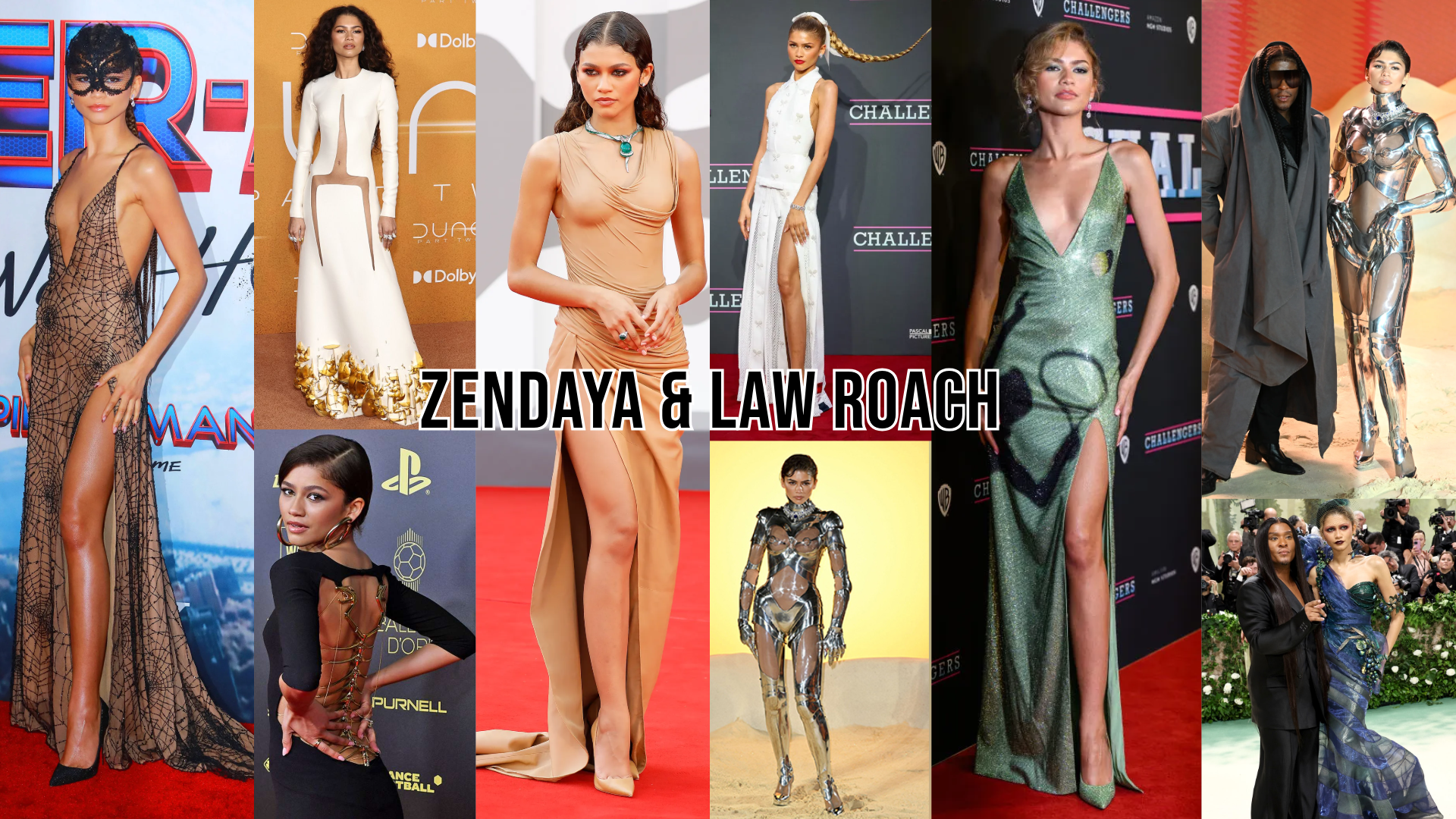
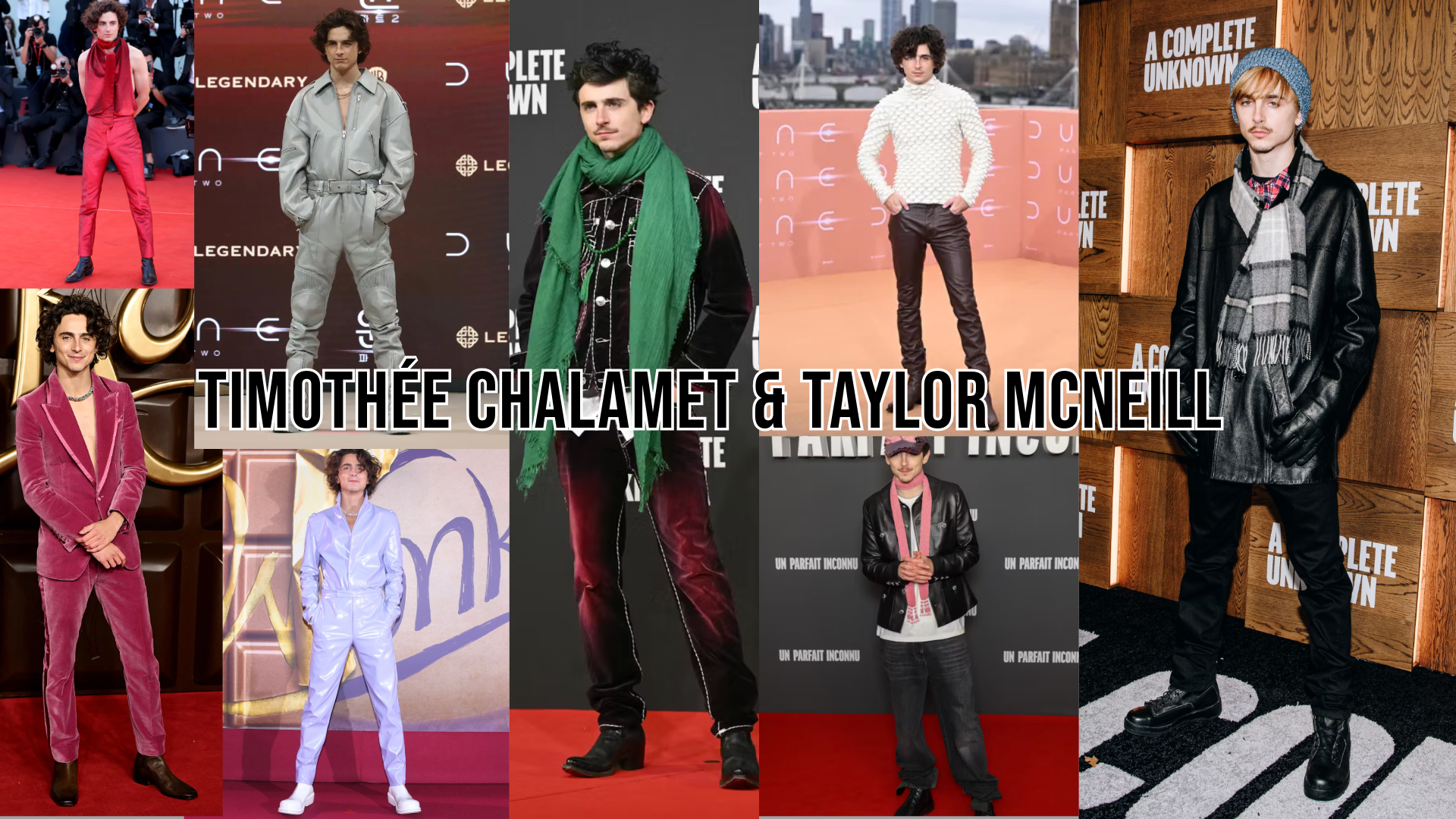
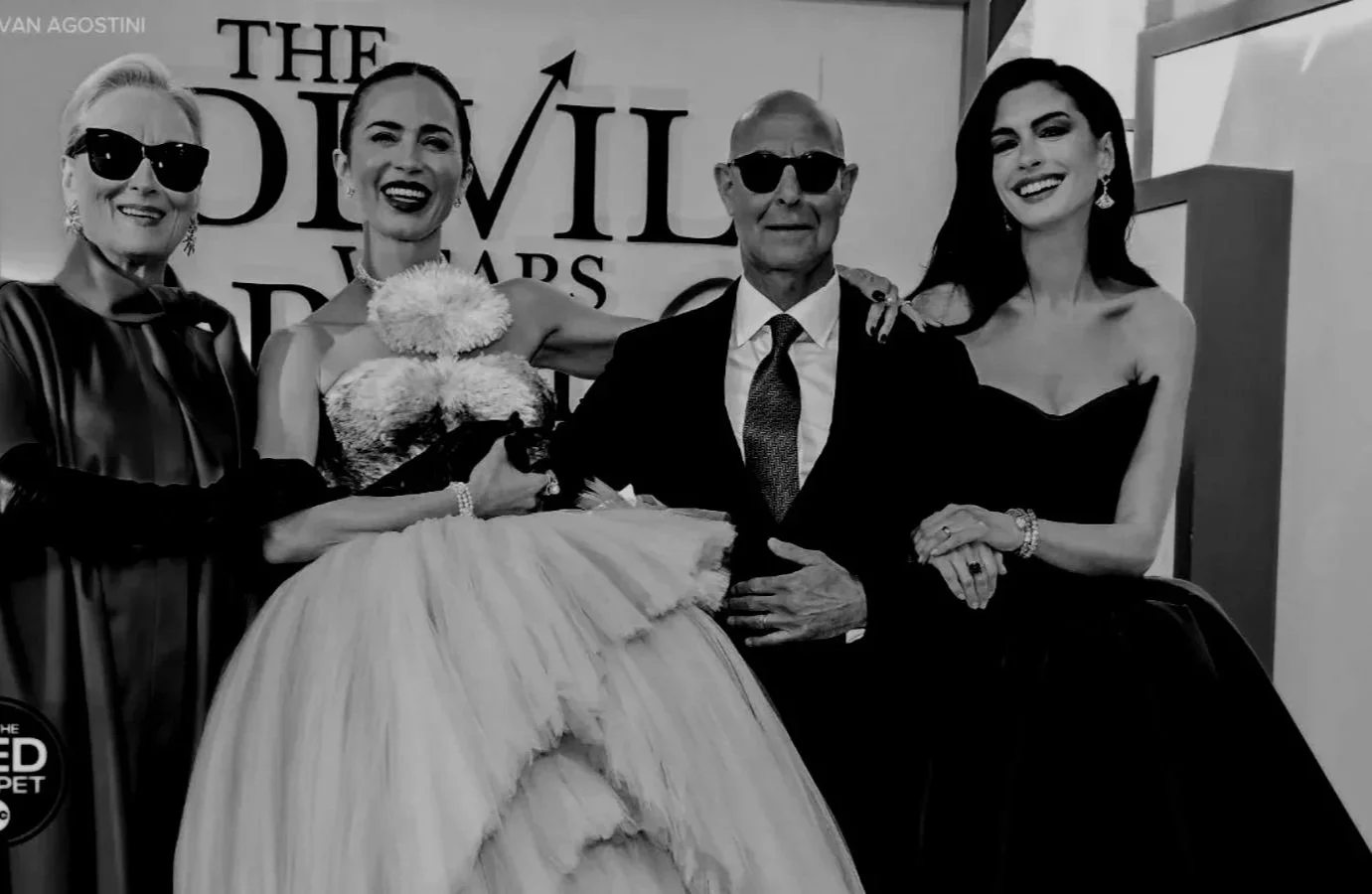
Press tours now involve Instagram stories, YouTube Q&As, TikTok content, and more. Fans are often included through fan screenings, livestreamed events, or influencer invites. While traditional press junkets still happen, there’s more focus on virality, memes, and relatable online moments. Press tour fashion now is an event in itself; think Zendaya or Timothée Chalamet. They include custom looks, stylists-as-stars, and fashion as storytelling. Outfits are curated to reflect the themes of the movie. Streetwear, couture, and cultural homage all mix together. Fashion is no longer just promotion; it’s narrative. Stylists build a cohesive fashion "story" across a tour.
method dressing
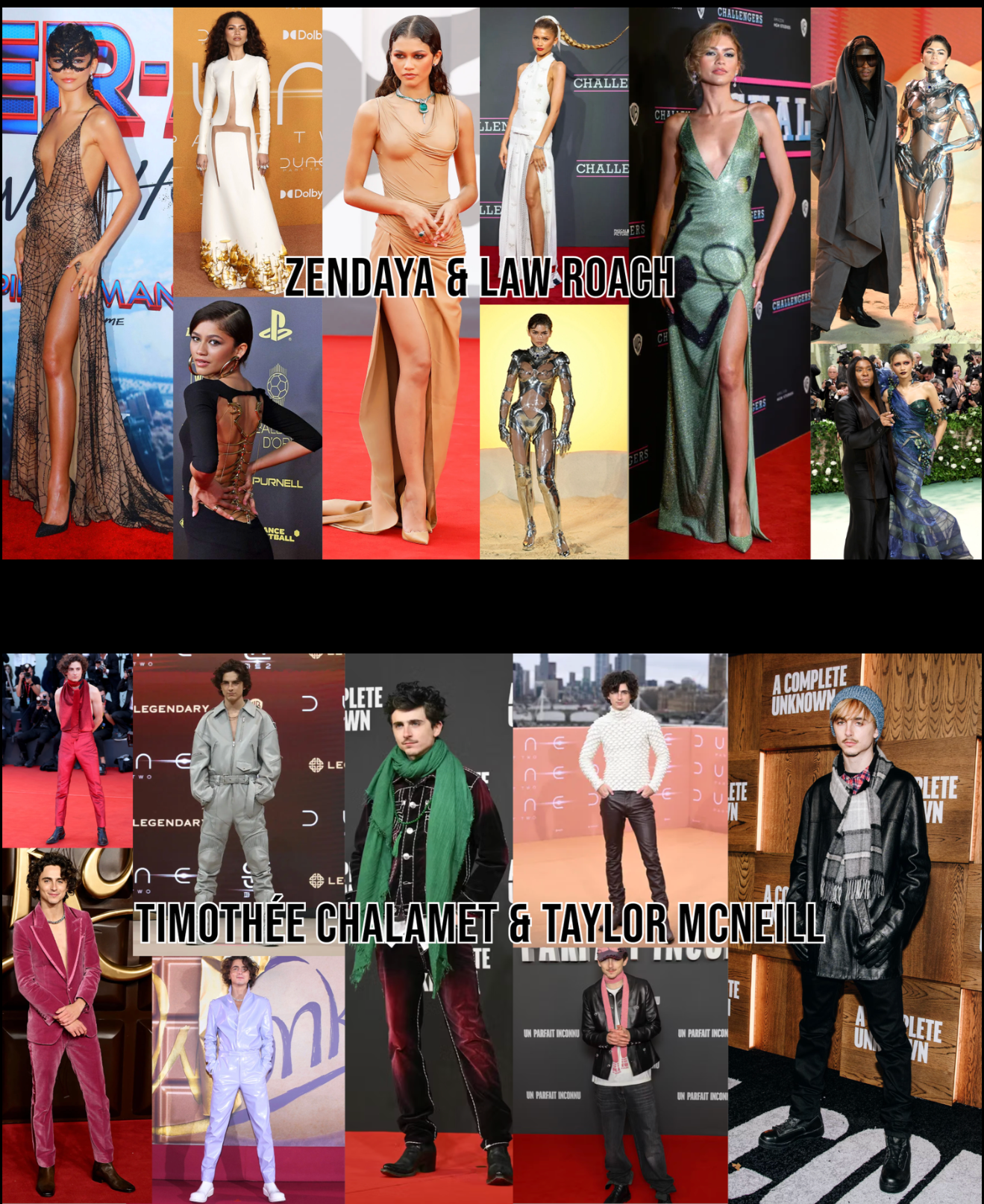
Press tour fashion is curated to reflect the themes of the film, and it is a narrative to build a cohesive fashion story. This leads to method dressing, which is described as actors’ real-life red carpet looks that reference their roles or the overall aesthetics of the film being promoted. When it is done correctly, the key to understanding method dressing is a nod to themes, palettes, or distinct call-outs without being too on the nose and becoming costume-like. Two of the most well-known actors for method dressing include Zendaya and Timothée Chalamet.
-
Some might say Zendaya and Law Roach have pioneered a new mode of method dressing. Law Roach has styled a number of A-listers, but his partnership with the actress Zendaya is what has made him a celebrity in his own right. The two began working together in 2011, when Zendaya was a Disney teen and Roach was an inexperienced stylist who did not know he needed to bring safety pins to fittings. Since then, they have become fashion’s most bankable duo; their collaboration is compared to that of Hubert de Givenchy and Audrey Hepburn. The key difference is that Roach is not a designer. Some see stylists as personal shoppers, and the industry has been slow to accept the profession, but Roach, who prefers to call himself “an image architect,” has shown that stylists have real clout. Roach’s signature technique is termed “method dressing,” a form of styling that plays with themes and motifs drawn from a performer’s role.
-
While Timothée Chalamet and Taylor McNeil are not nearly a duo as well known as Zendaya and Law Roach, Chalamet himself has really changed the world of men's fashion, especially for press tours. The global press tour for A Complete Unknown posed a new opportunity for Chalamet. Though his blockbuster turn in Wonka made him a multigenerational star, the role also left a void of sex appeal in its wake, and recuperation would require a shift: It's a return to his gauche-swagger form, but weirder. More personality, less polish. Each of his looks was carefully chosen, appearing natural, with fashion choices guided by the actor’s new stylist, Taylor McNeill. Instead of doing the awards season circuit dressed in a boring tuxedo or classic menswear tailoring, he and his stylist Taylor McNeill went balls-to-the-wall with fashion. Through all of these appearances, Chalamet is grinning more often than not. He and McNeill have mastered the art of celebrity dressing in 2025, which is not just about method, nostalgia, or getting clicks. It’s about the simple purity of enjoying the clothes.
How Press Tours Set Up the Narrative of a Film
In the current media landscape, press tours and their accompanying fashion choices play a crucial role in shaping the narrative of a film before audiences even see it. Today’s promotional strategy is no longer just about selling a movie; it’s about world-building, teasing tone, and immersing fans in a curated experience that starts well before the opening scene. Actors often dress in looks that subtly (or sometimes overtly) reference their characters, the film’s themes, or its aesthetic palette. These style choices, paired with social media-friendly content, contribute to a cohesive story world that blurs the line between film and reality. Press tours today are like trailers in motion: fashion becomes costume, red carpets become stages, and actors become extensions of their roles. This highly curated visual storytelling helps build hype, foster fan engagement, and guide audience expectations even before a single frame of the film is released.
the outcome
Overall, I learned that fashion PR is highly intentional, and it is a form of storytelling. Nothing on a press tour is accidental; every look is used as a strategic tool to communicate a narrative and reinforce brand identity.
I also learned how important consistency and timing are in shaping public perception and how much coordination happens behind the scenes between PR teams, stylists, and talent.