
gap analysis-six month buy plan


the ask
Develop a 6-month buying plan for GAP womenswear FW 2025, including a brand analysis, competitor research, an assortment plan, and our justification.
the team

adair breeden

isabella covello
Assortment planning
Merchandising Strategy
key skills

trend research
inventory management
microsoft excel

consumer behavior
the process
-
Define the characteristics of the women's wear industry.
Highlight market locations and dates for the 2025 Fall season.
Discuss domestic production versus offshore production and their advantages and disadvantages.
Discuss the major price zones in women’s apparel, define each price zone, and include examples of known retailers and brands for each.
-
Create a 6-month sales plan for GAP women’s wear.
Project the total season’s Fall 2025 sales.
Project monthly sales.
Project the stock-to-season ratio & BOM inventory.
Calculate turnover, markdowns, purchases, & gross margin.
Justify each decision in a report.
-
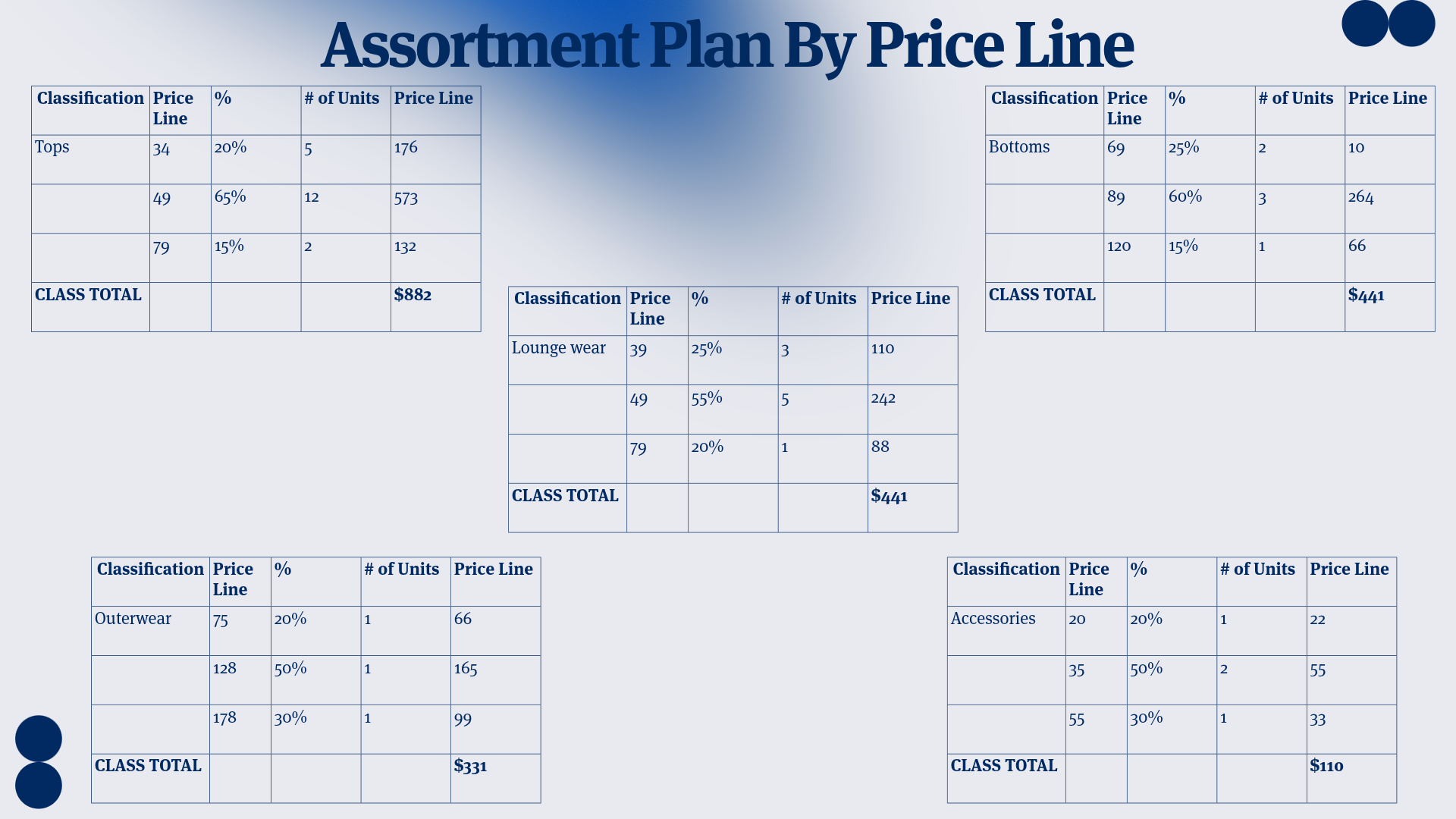
Create an assortment plan with both classifications of sales and purchases.
Explain classifications chosen.
Identify 3 different price points.
Calculate unit purchases by price point.
-
Create a visually creative slide deck that displays the research and calculations done throughout the semester.
women’s wear Research
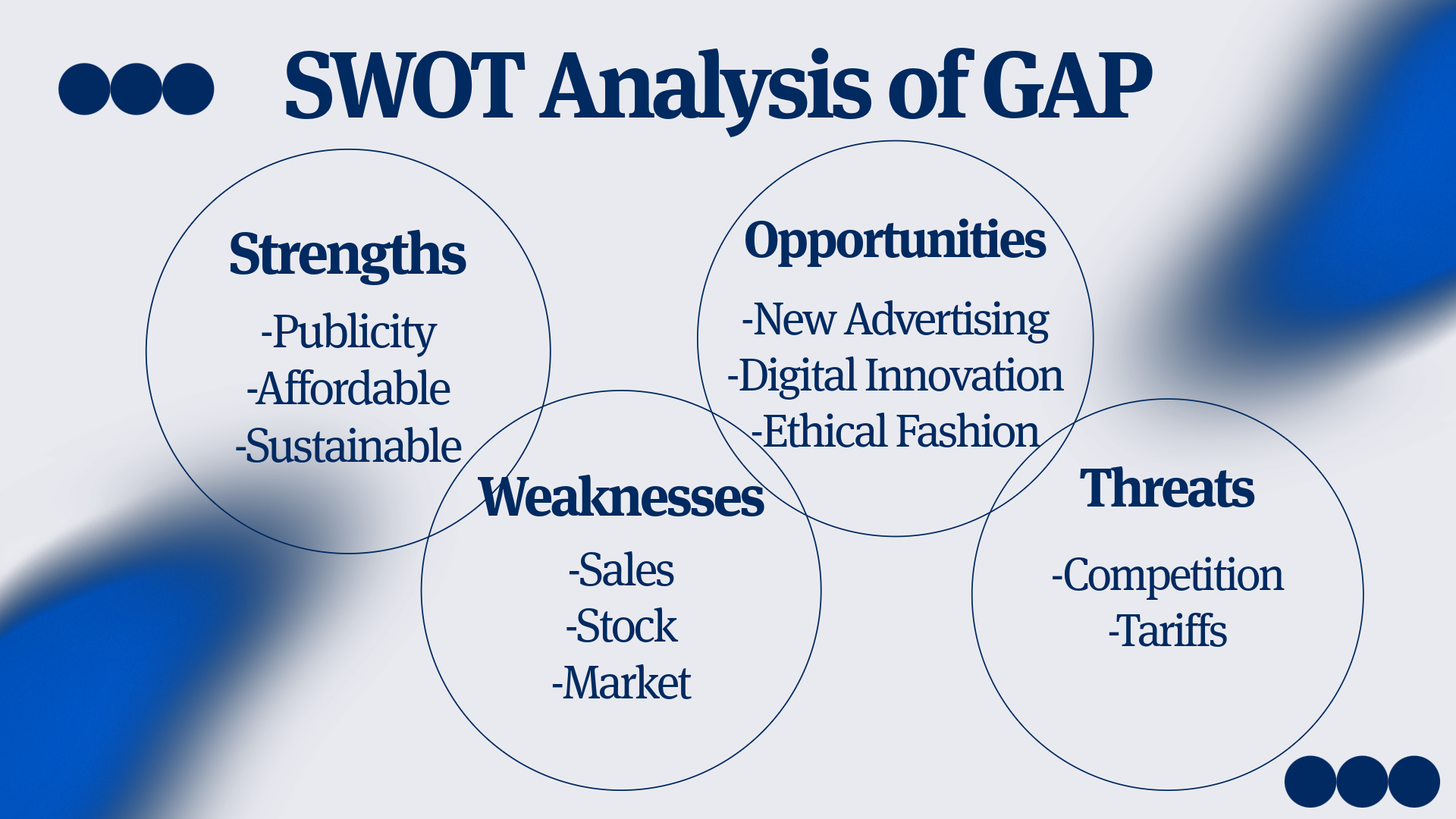
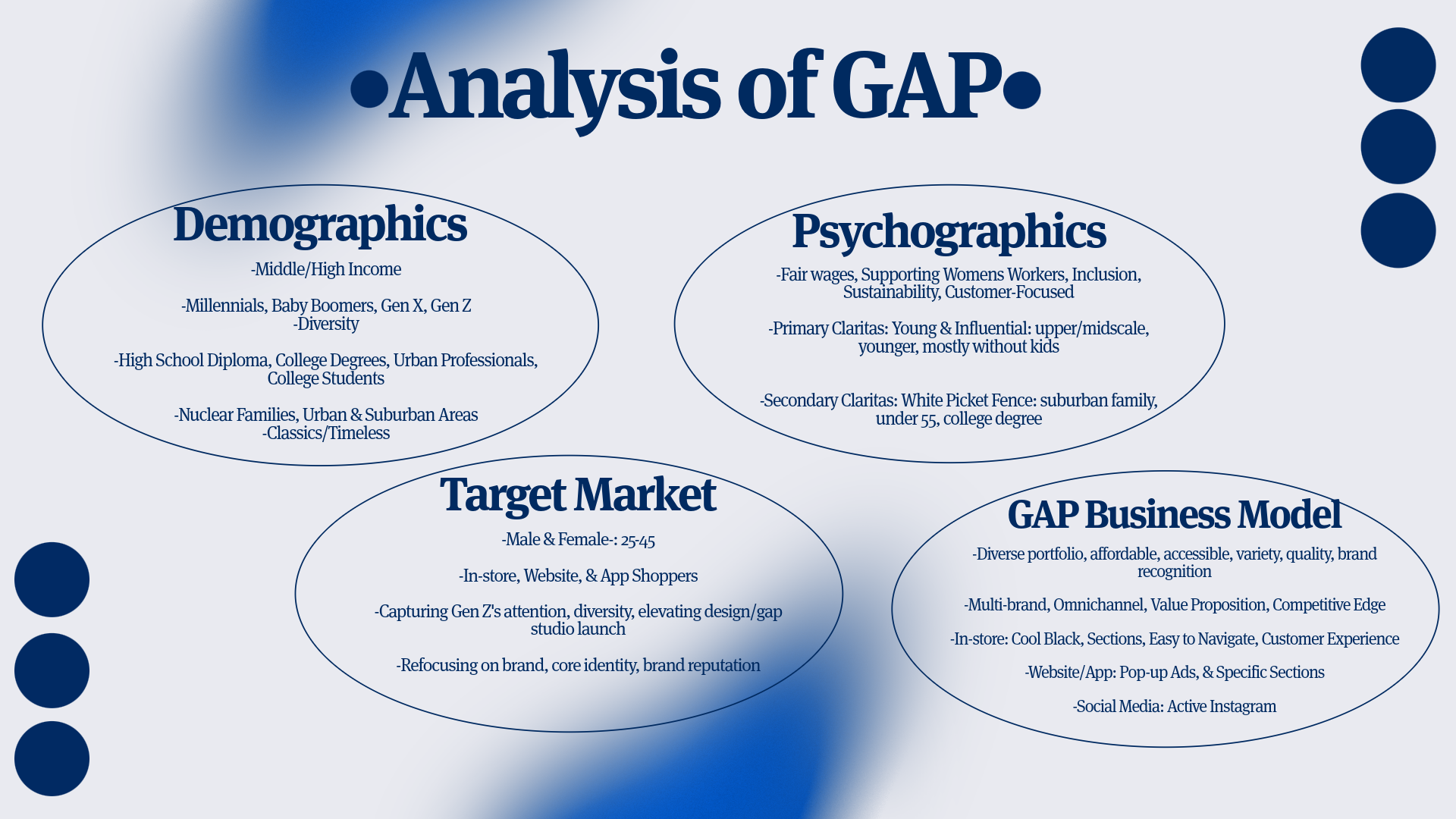
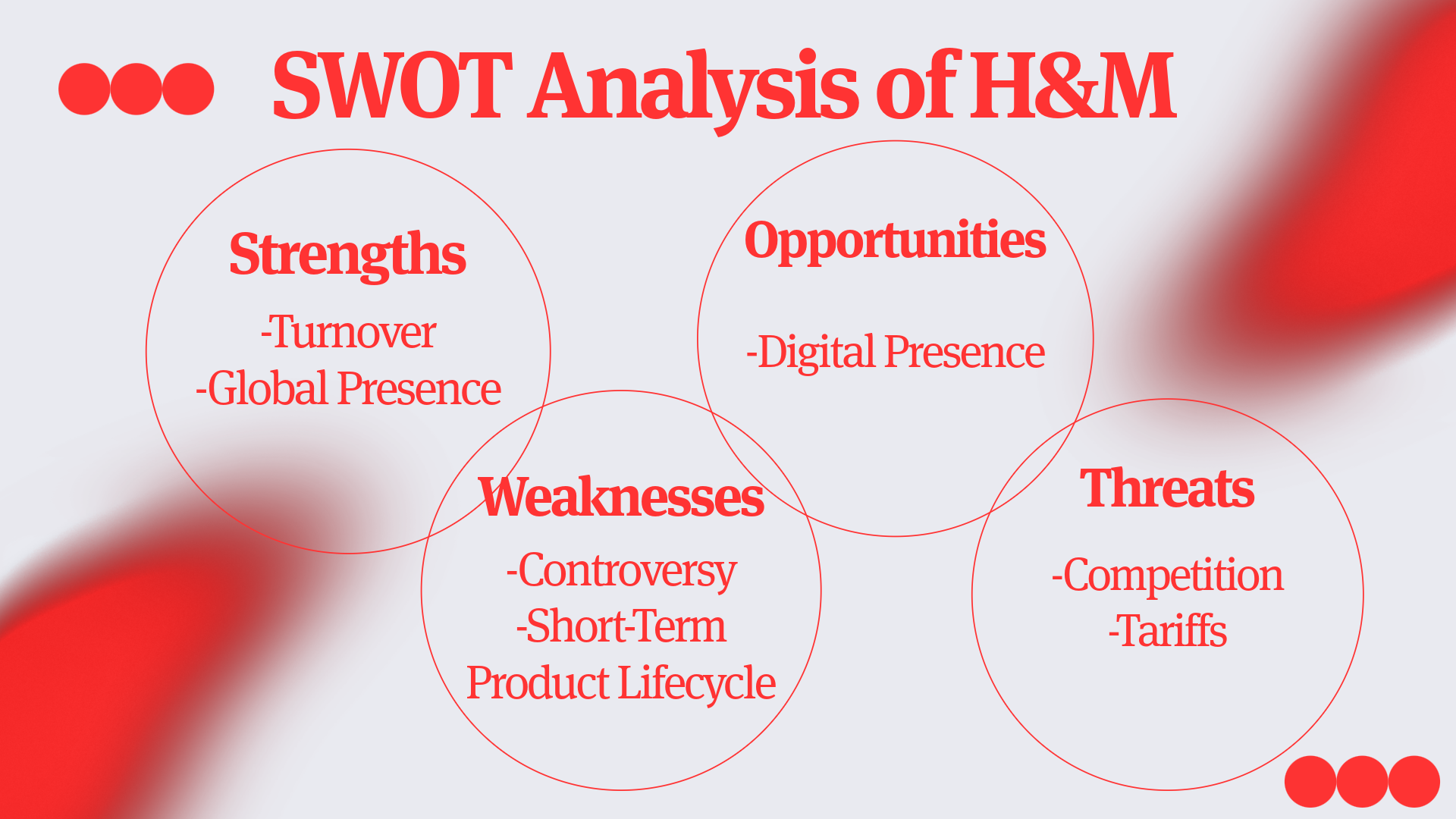
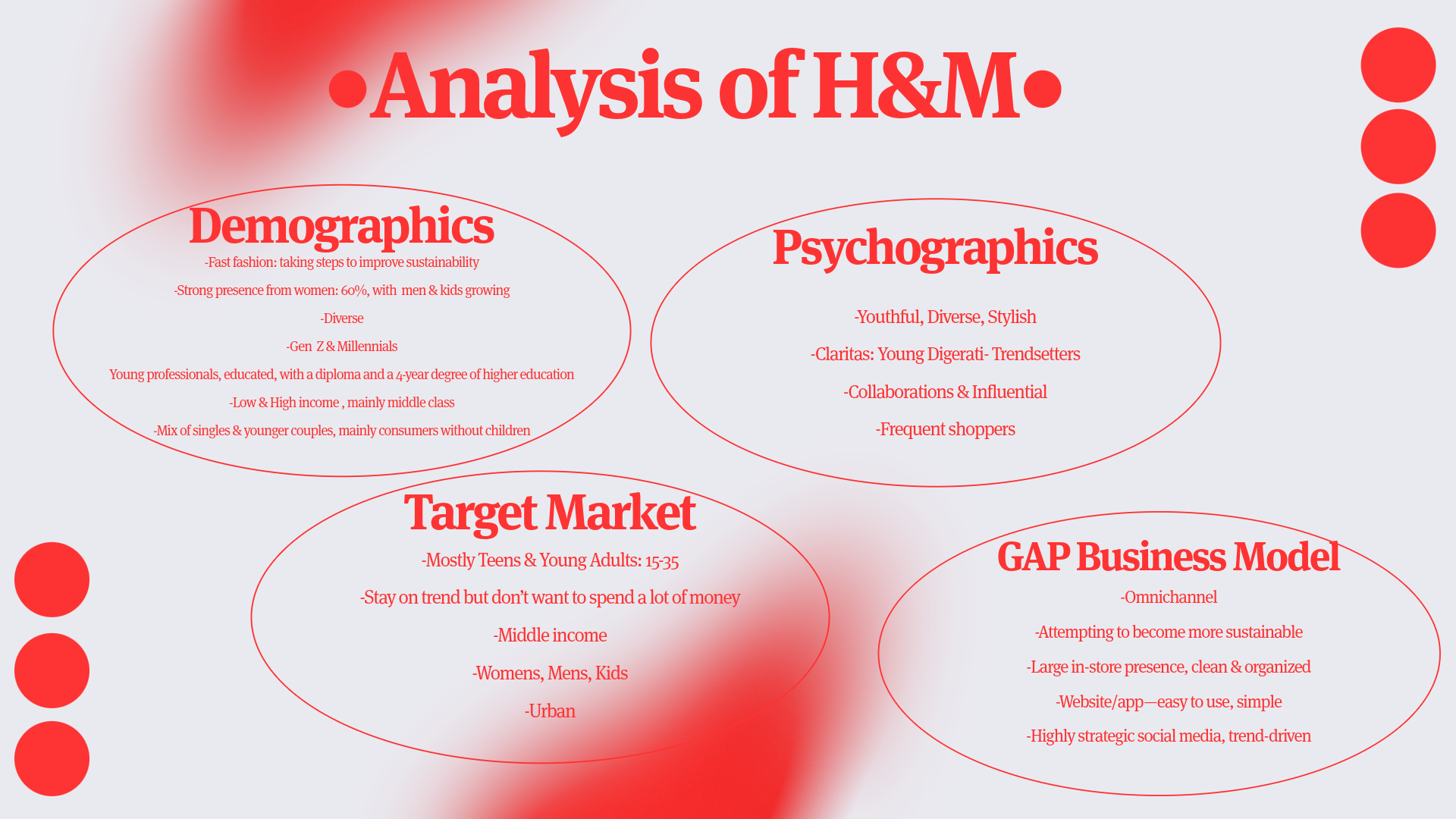
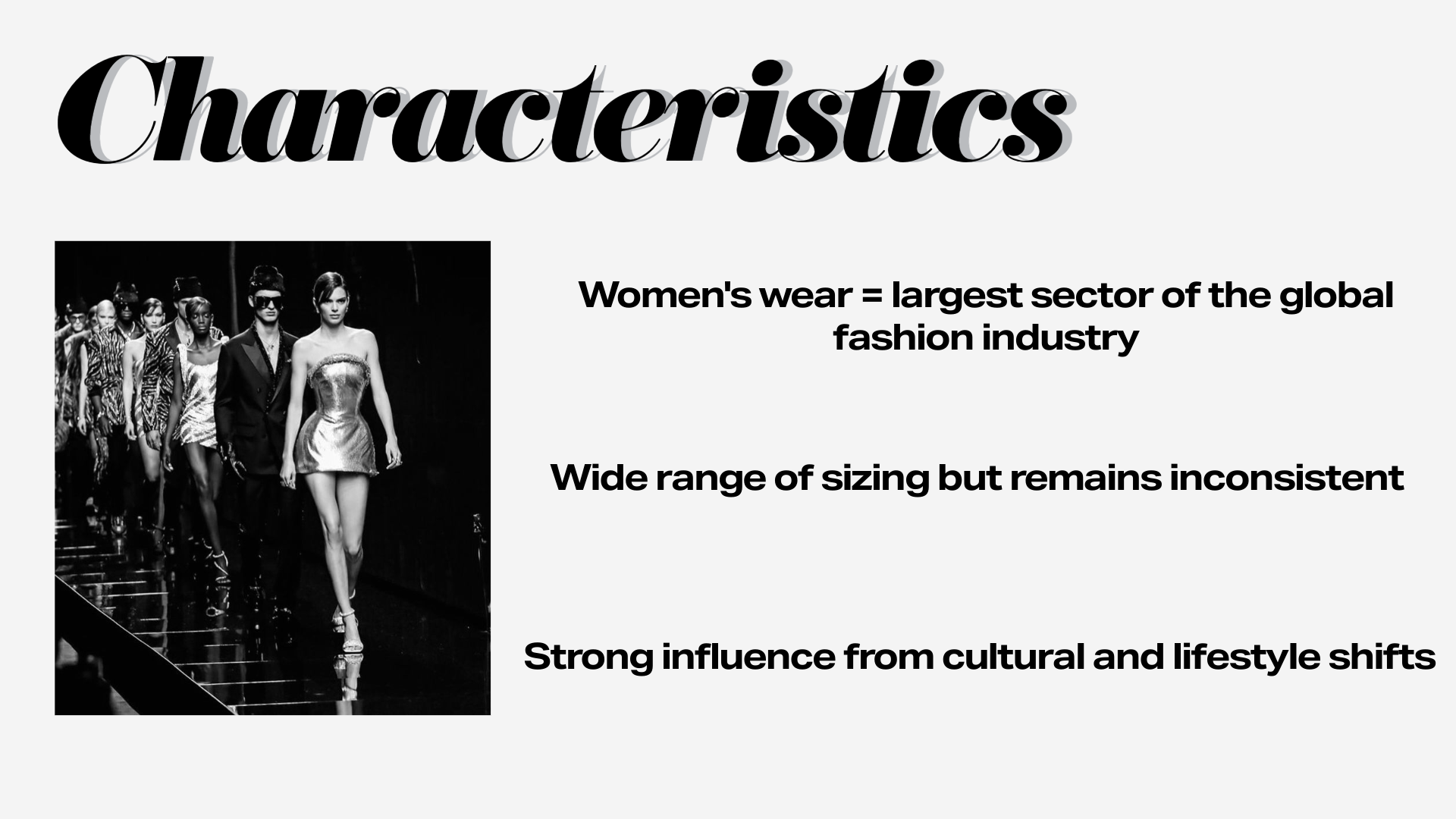
We first conducted our research into the women's wear industry in 2025. We identified the characteristics and key metrics of the industry as well as the different price zones within it.
With this, we were able to build our plan over the semester, going back to our original research and seeing what consumers would want.
the 6-month plan
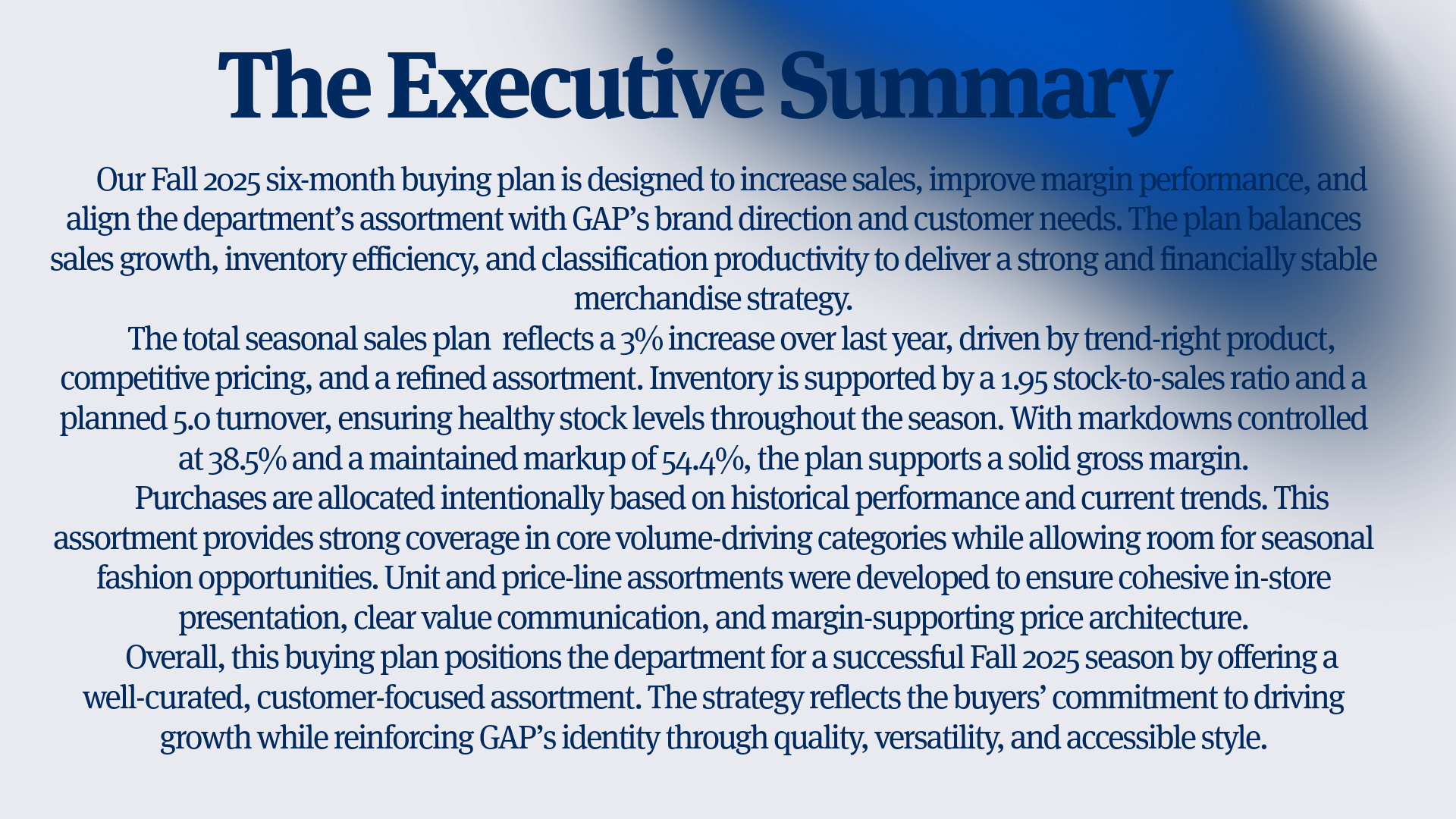
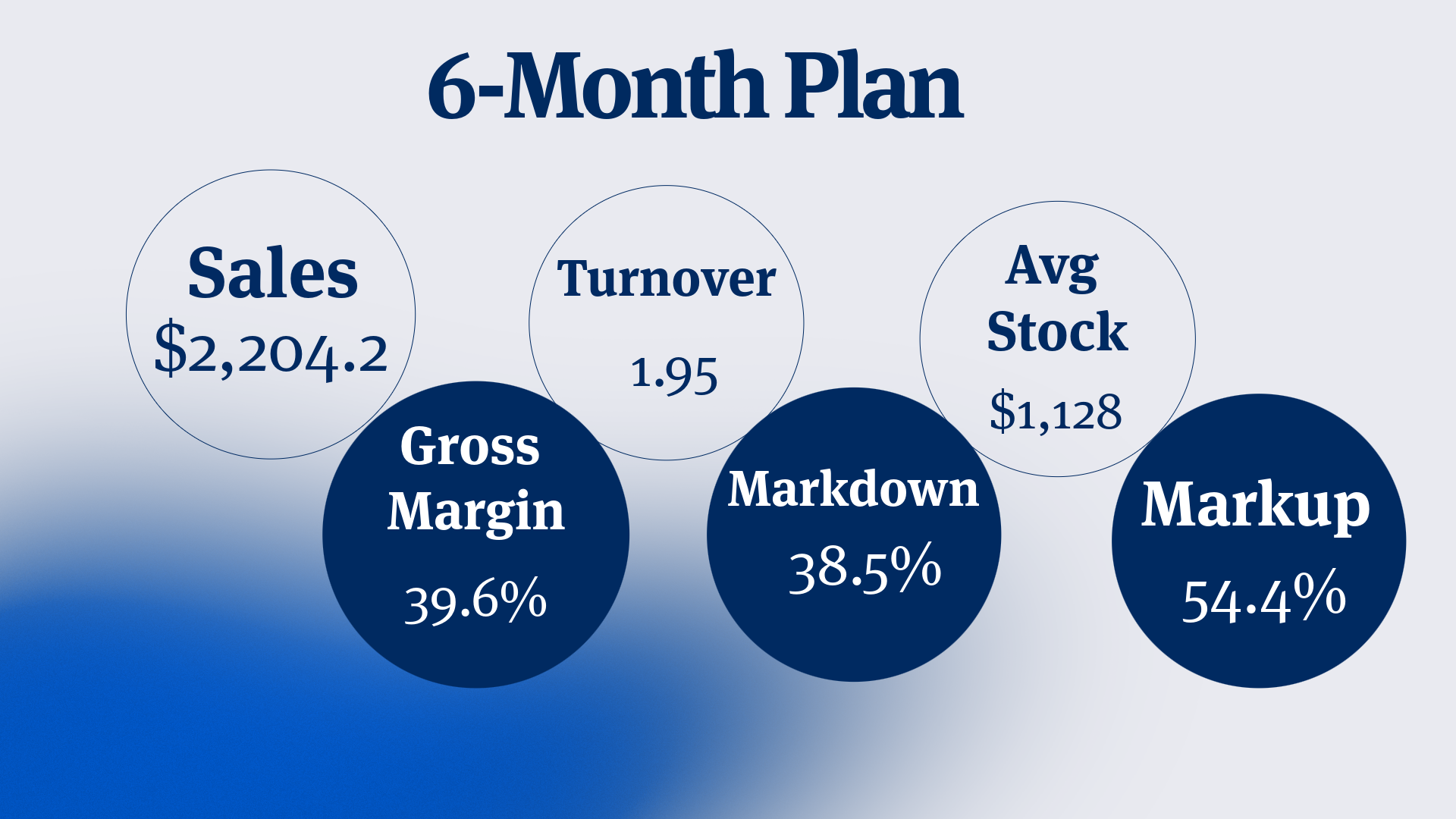
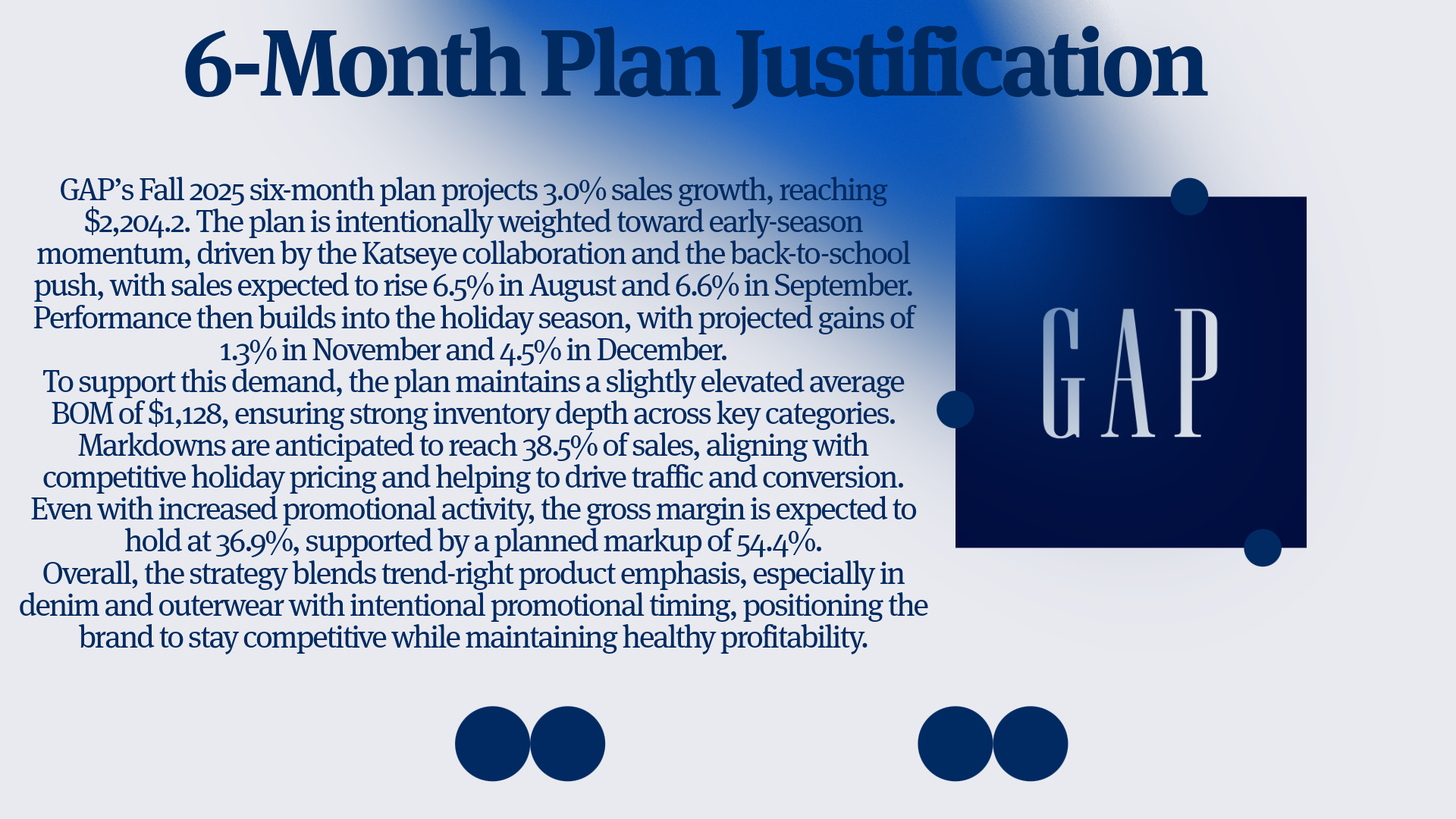
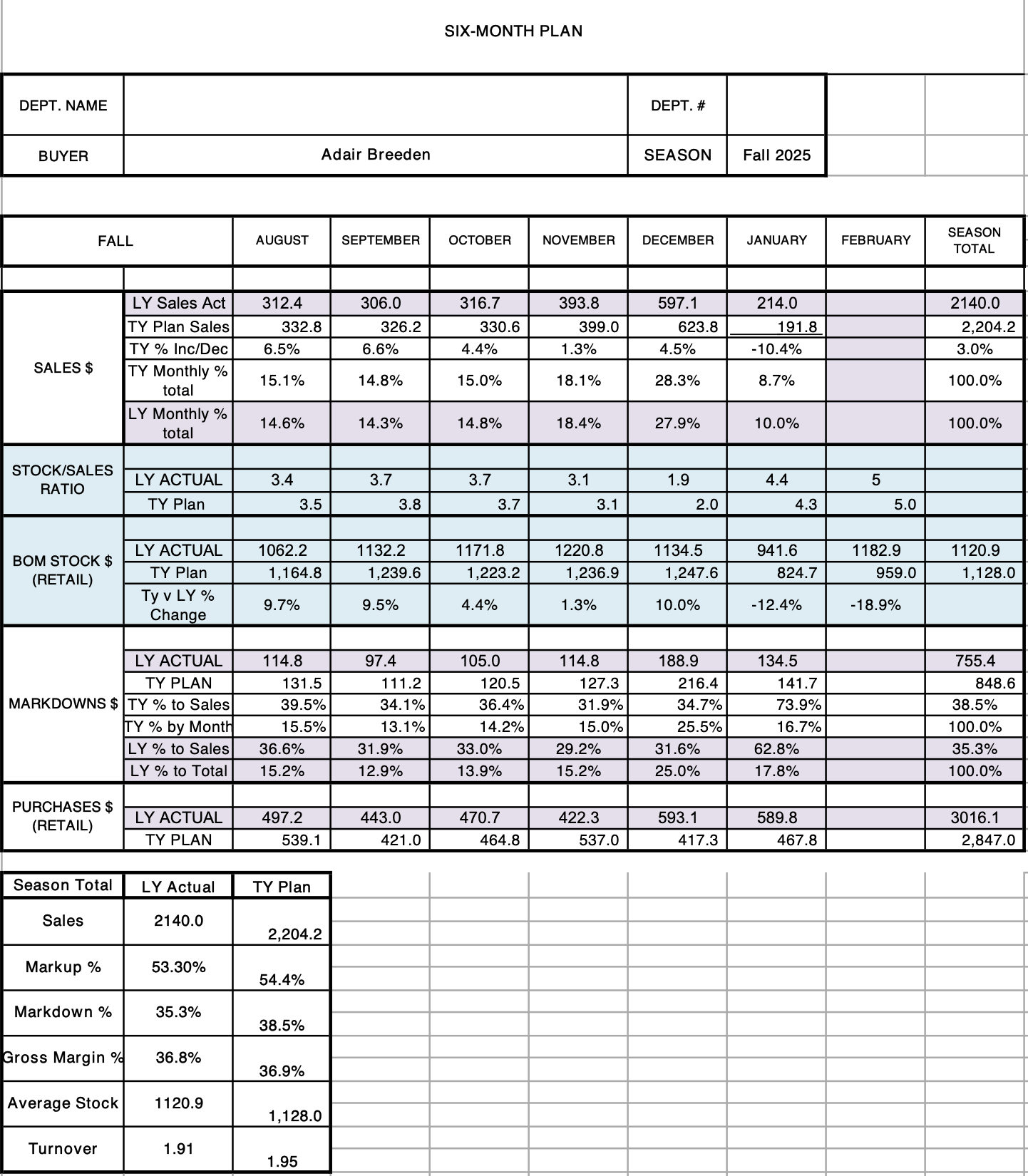
Next, we created our 6-month buy plan by predicting GAP women’s wear Fall 2025 sales by month. We took brand and consumer research into account, including advertisements, collections, releases, and holidays, as well as what is happening in each month, while projecting and calculating the stock-to-season ratio and the BOM inventory. With our total seasonal sales, we then calculated turnover, markdowns, purchases, and gross margin for the Fall season.
the assortment plan
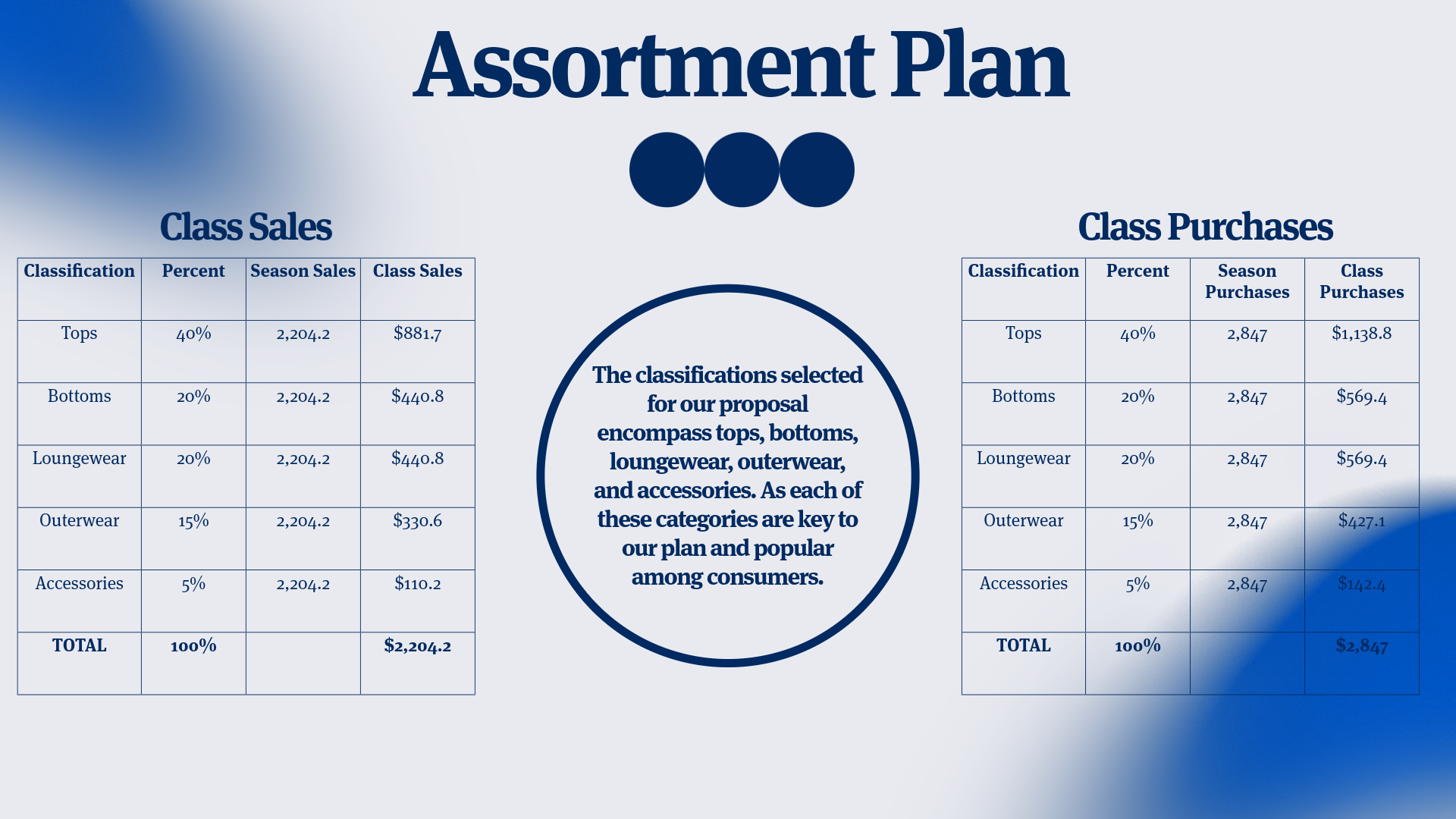
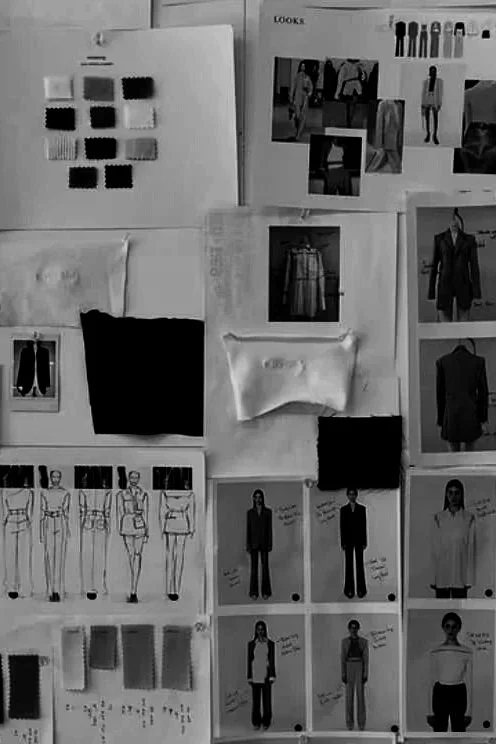
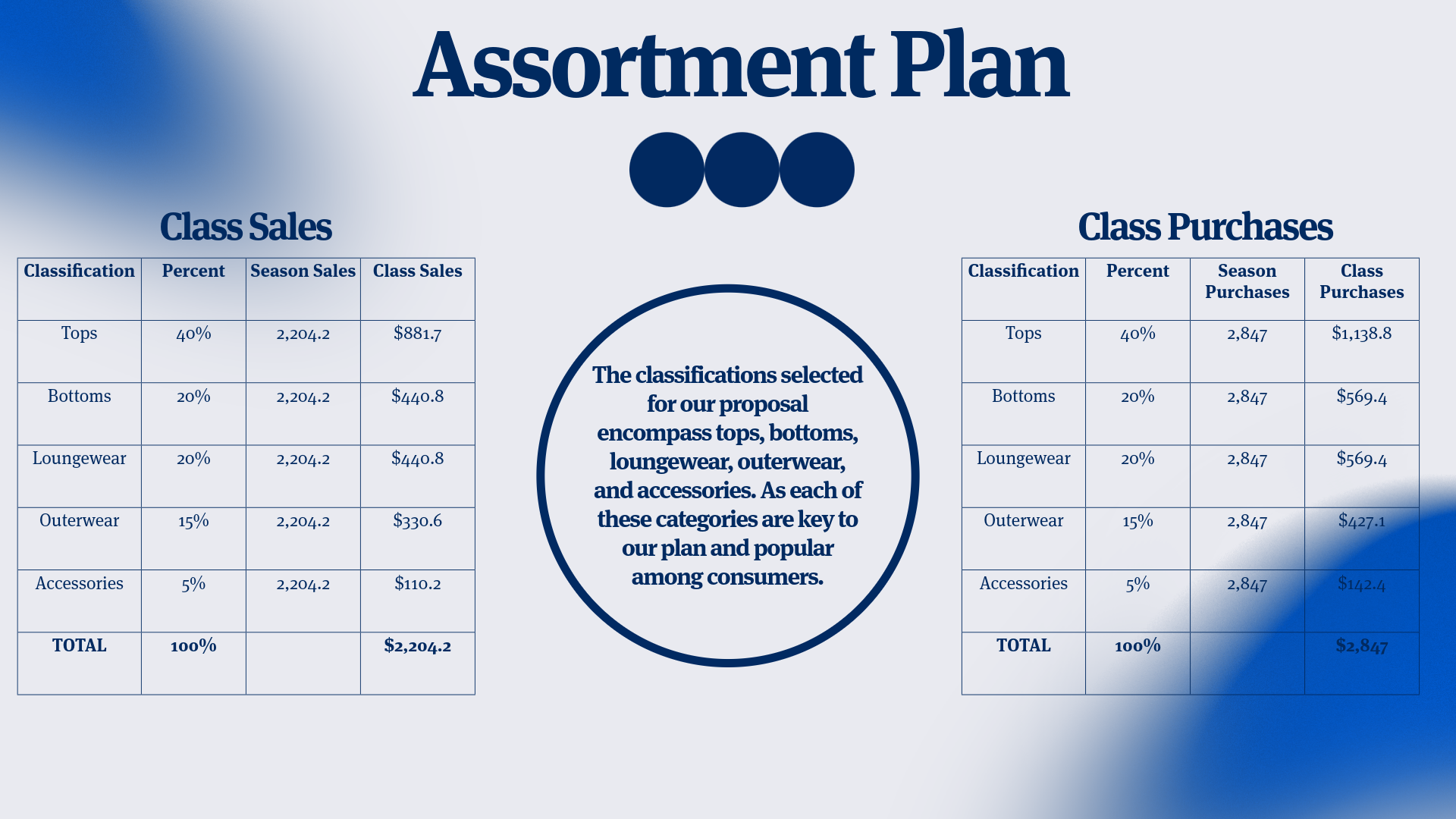
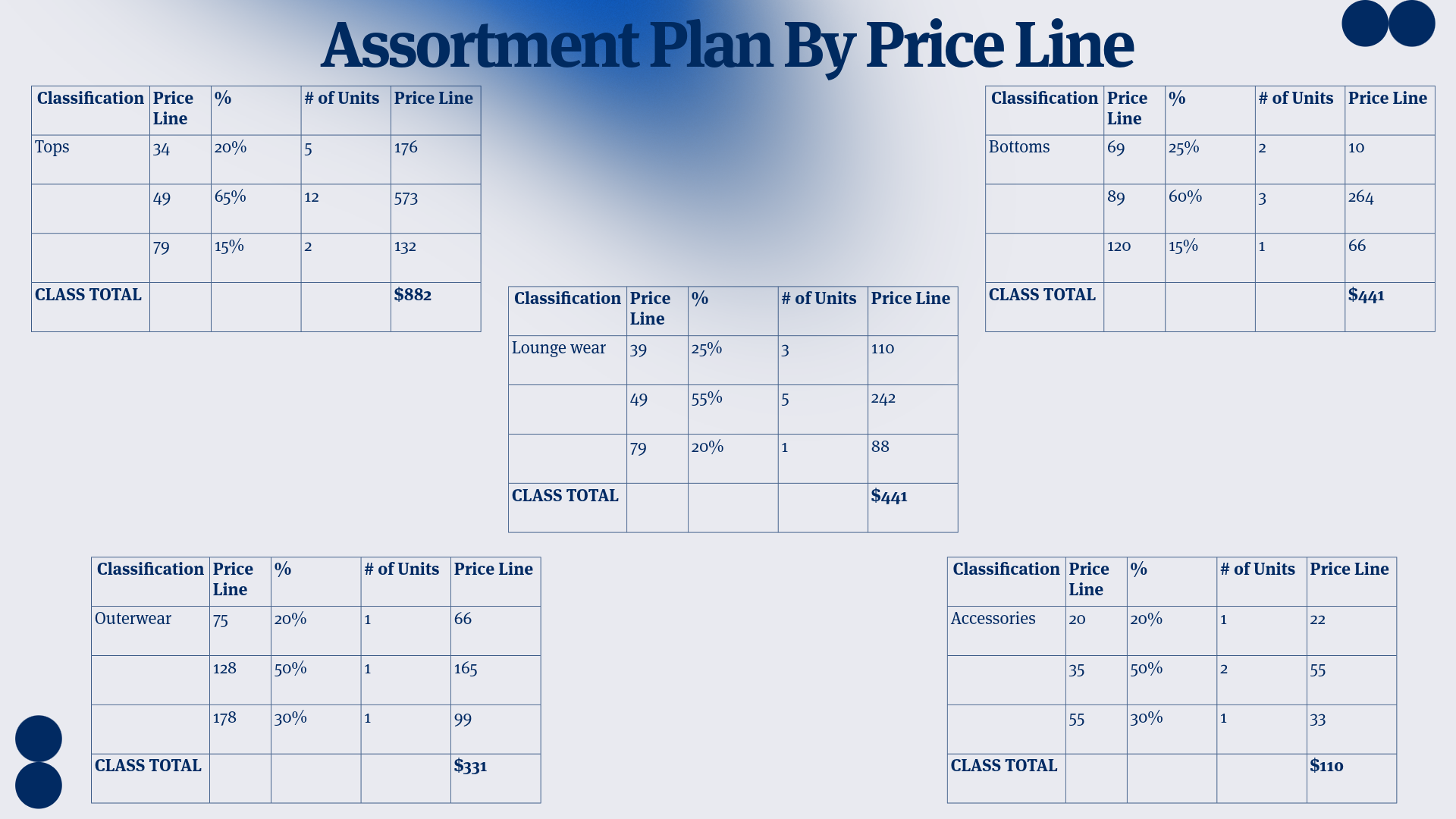
We then used our sales data to create an assortment plan with both classifications of sales and purchases.
Our assortment plan included three researched price points for each garment classification group. This includes a sales plan that details total sales in dollars per group and unit purchases by price point.
Our predicted sales were based on the assortment plan by classification, which included tops, bottoms, outerwear, loungewear, and accessories.
the final package
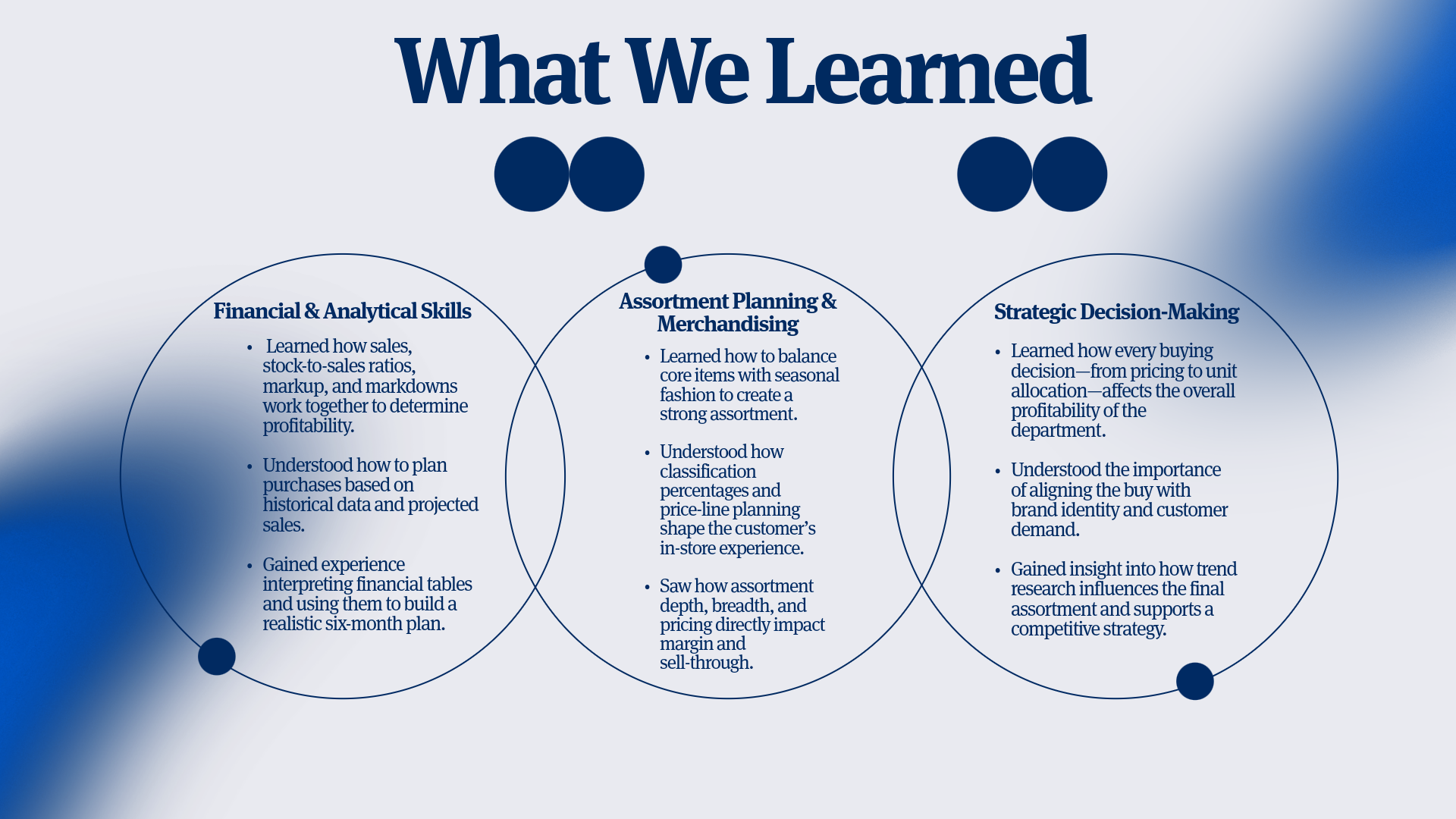
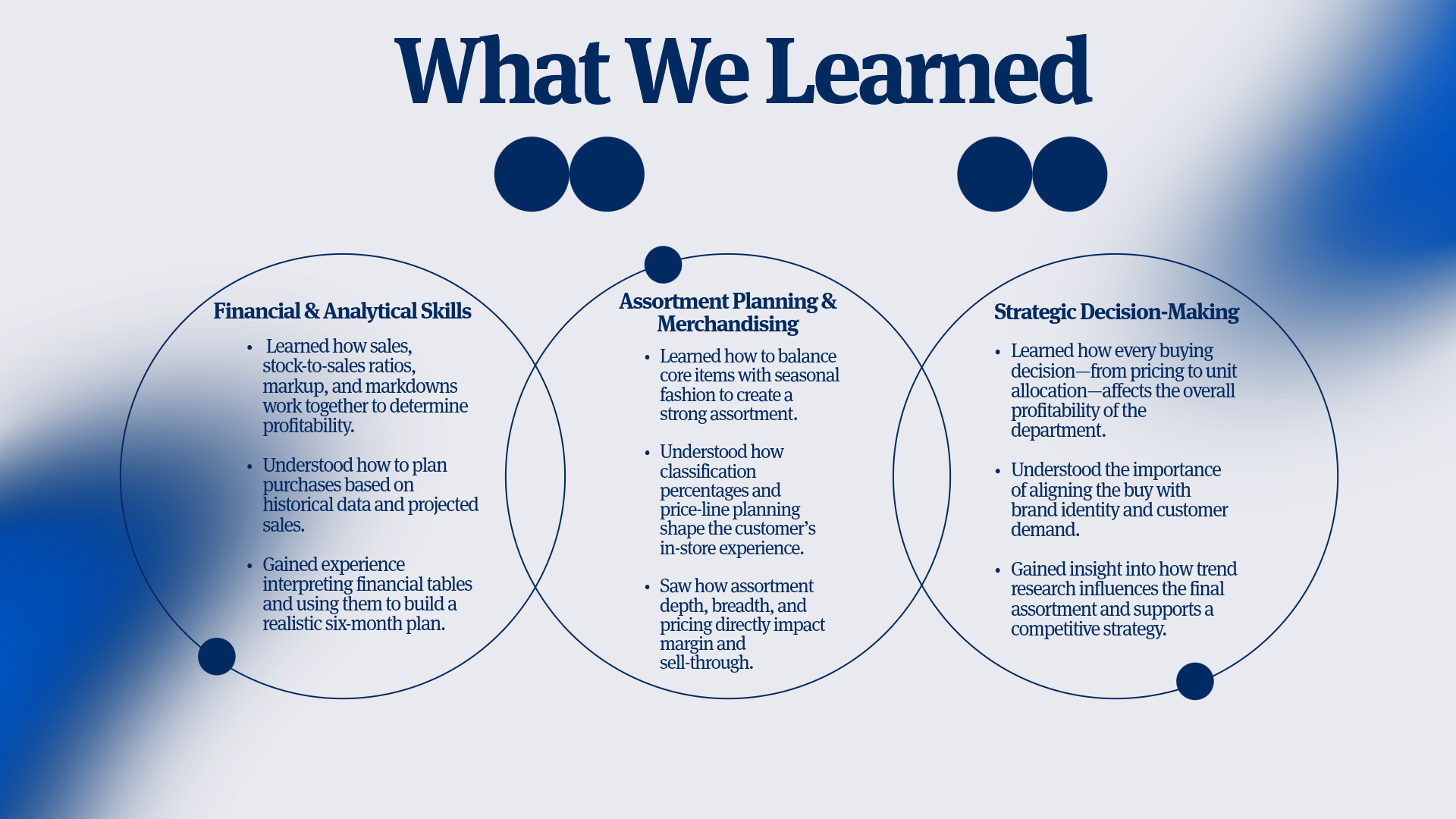
Lastly, we converted all of our information into a visually appealing slide deck; we predicted that the Fall 2025 season would have a 3% increase in sales based on recent ads and campaigns. Highlighting that we have gained the understanding of financial and analytical skills, assortment planning and merchandising, and strategic decision-making.
the outcome
Completing this buy plan made me realize how every buying decision affects the overall profitability of a department. I gained the knowledge of how to plan purchases based on historical data, projected sales, and consumer demand. I gained experience interpreting financial tables and using them to build a realistic six-month plan.